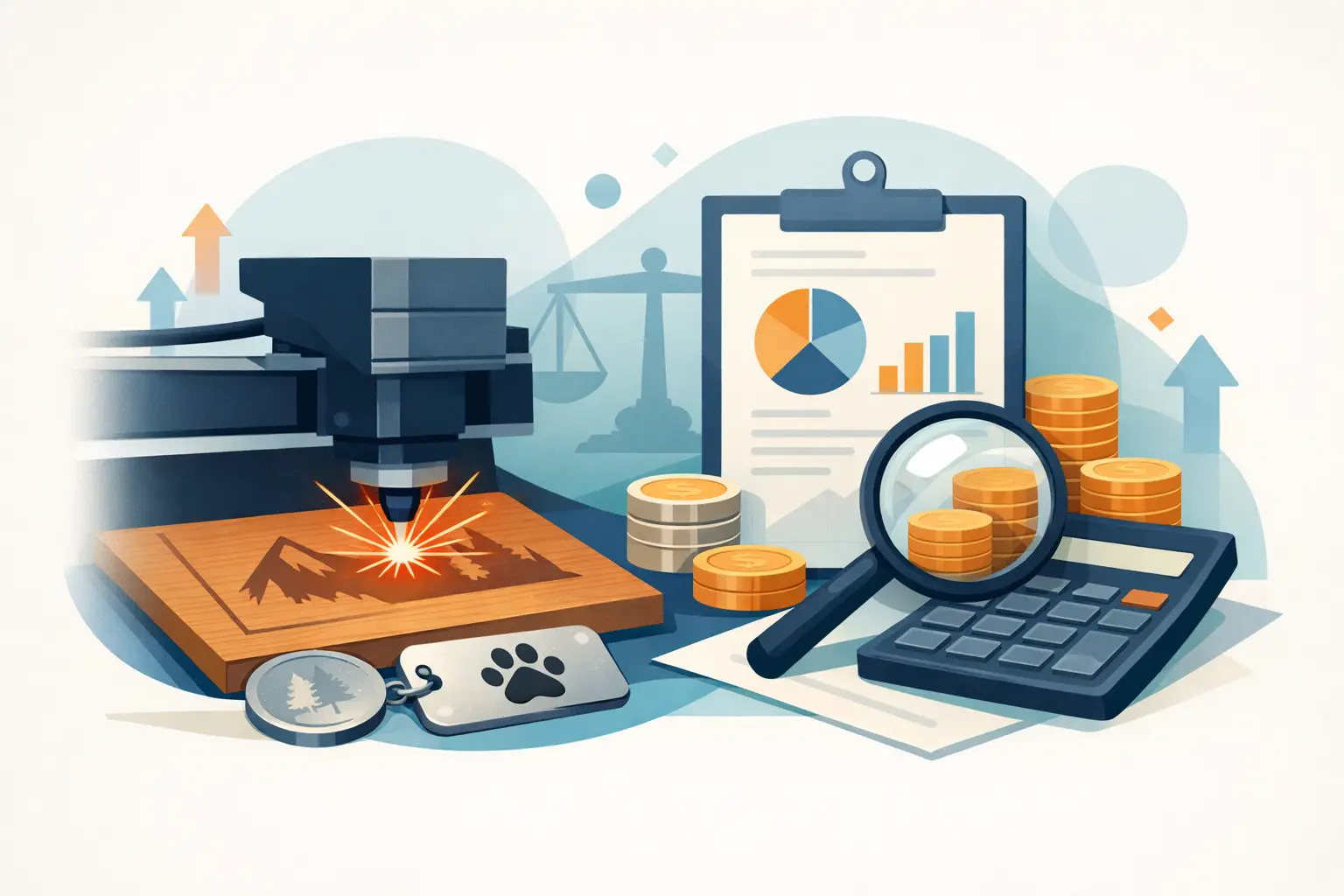
A name on a pocketknife, a family recipe on a cutting board, or a clean logo on slate can turn an everyday item into something worth holding onto. Custom laser engraving cost is not one flat number because every piece brings its own material, size, artwork, and preparation needs. A good quote accounts for the work required to produce a crisp, lasting mark – not just the seconds the laser is running.
At Get to the Point LLC, the goal is simple: precision engraving, honest expectations, and a finished piece that looks right in the hand. Knowing what affects pricing helps you choose the right item, design, and quantity before the work begins.
What Goes Into Custom Laser Engraving Cost
The material is usually the first factor. Wood, slate, coated metal, leather, glass, and stainless steel do not react to a laser the same way. Some materials engrave quickly with strong contrast. Others require slower settings, careful testing, specialized preparation, or a different process to achieve a clean result.
A simple design on a wood coaster may take little setup. A detailed image on a customer-supplied knife, on the other hand, calls for more care. The surface may be curved, coated, polished, textured, or difficult to secure. The work is still precise, but it is not the same job.
Size matters too. A small monogram takes less time to position and engrave than a full cutting-board design with names, a date, decorative borders, and a recipe. Larger designs can also require more cleanup and inspection, especially when detail needs to stay sharp from edge to edge.
Artwork is another major part of the price. Clean, ready-to-engrave artwork is the fastest path to a straightforward quote. A simple name in a standard style is usually easier to prepare than a low-resolution photo, a complex logo, or a hand-drawn idea that needs to be rebuilt for engraving.
The Difference Between a Simple Mark and Custom Artwork
Not every engraving job starts with finished artwork. Many customers know what they want to say but need help turning that idea into a design that works on the chosen item. That design time has value because laser engraving is unforgiving of weak artwork. If the file is blurry, overly detailed, or poorly sized, the engraving will show it.
Simple personalization often includes a name, initials, a short date, or a brief message. These projects can be quick to set up when the placement and font are clear. They make practical gifts feel personal without adding unnecessary complexity.
Custom artwork may involve combining names with graphics, cleaning up a business logo, arranging text around a shape, converting a photograph, or creating a layout for a larger piece. That work takes more time before the first engraving pass begins. It can cost more, but it also gives the finished item a purpose-built look rather than a rushed one.
The best approach is to match the design to the item. A bold name and a simple deer silhouette may read well on a knife or hatchet handle. A detailed family recipe belongs on a larger cutting board, where there is enough room for the lettering to stay readable. Trying to force too much art into a small space can make a piece harder to read and less useful.
Material Changes the Price and the Result
Wood is a popular engraving material because it offers natural character and strong contrast. Cutting boards, signs, keepsake boxes, and wood-handled items can all take engraving well, but grain direction and wood species affect the final appearance. Light woods and darker woods can produce different levels of contrast, even with the same design.
Slate coasters create a rugged, clean look that works especially well for housewarming gifts, wedding sets, cabin decor, and business logos. Because each piece of slate has natural texture and edges, careful positioning matters. A set of coasters also requires consistency, so the design looks intentional across every piece.
Metal items require a closer look. Bare metal, coated metal, anodized surfaces, and stainless steel may need different laser settings or marking methods. A dark coating can create a bright, high-contrast mark when removed. Stainless steel can produce a durable mark, but the expected finish should be discussed before the job starts.
Customer-supplied items deserve special attention. A favorite knife, family heirloom, collector piece, or one-of-a-kind item may carry more risk than a standard blank. Surface condition, coatings, contours, and hidden defects can affect results. A professional engraver should inspect the item and be clear about what can be done before placing it under the laser.
Quantity Can Lower the Per-Piece Cost
One custom item and a batch of matching items are priced differently because setup time can be shared across a larger order. Once artwork is approved and placement is dialed in, engraving multiple identical pieces is generally more efficient than preparing each piece from scratch.
That does not mean every bulk order is simple. A group of 25 tumblers with the same logo is different from 25 knives with individual names. Variable names, dates, or messages still require individual file changes and final checks. The per-piece price may improve with quantity, but personalization keeps each item from being fully automated.
For team gifts, wedding favors, company awards, hunting camp gear, or real estate closing gifts, it helps to decide early whether every piece will carry the same design. If names are needed, send them in a clean, final list. Correct spelling before engraving saves time, avoids delays, and keeps the project moving.
How to Get an Accurate Engraving Quote
The fastest way to get a useful quote is to provide the details that affect the work. Start with the item itself: what it is made of, its approximate size, and whether you are providing it or need the item supplied. Then explain what you want engraved and where you want it placed.
Photos are helpful for customer-supplied items, especially knives, tools, drinkware, and objects with curved or uneven surfaces. A photo can show coatings, handles, existing logos, engraving space, and potential obstacles before the item is dropped off or shipped.
Be specific about the artwork. If you have a logo, provide the cleanest file available. If you want text, include the exact spelling, preferred wording, and any date or name that must appear. If you have an inspiration image rather than finished artwork, say so. That signals that design preparation may be part of the job.
It also helps to share the deadline. A gift needed for a birthday this weekend is not handled the same way as a company order planned for next month. Rush work may be possible depending on the schedule and the job, but giving proper lead time protects quality.
Where It Makes Sense to Spend More
The lowest price is not always the best value when the item has a job to do or a story to carry. A sharp, readable engraving on a quality kitchen knife, hunting knife, cutting board, or heirloom keepsake can last for years. Poor placement, weak contrast, or overcrowded artwork can make even an expensive item look cheap.
Spend more when the piece needs custom art, detailed preparation, careful alignment, or durable marking on a challenging material. It is also worth investing in a larger, cleaner design instead of squeezing every idea into a small area. Good engraving respects the material and leaves room for the details that matter.
For simple gifts, keep the design focused. A name, date, or short phrase often carries more weight than a crowded layout. For business pieces, use a clean logo and readable contact information rather than shrinking too much text onto a small surface.
A Better Way to Plan Your Project
Start with the purpose of the item. Is it a working knife, a wedding gift, a memorial piece, a set of coasters, or a branded giveaway? That answer helps determine the right material, design size, and level of detail.
Then choose the detail that will still matter five years from now. A well-placed name on a knife used every hunting season can mean more than a complicated graphic nobody can read. A family recipe on a cutting board can become part of the kitchen instead of something stored away in a drawer.
Custom engraving is craftsmanship, not a sticker applied at checkout. Bring a clear idea, choose an item worth engraving, and leave enough room for precision. The result is a piece built to be used, remembered, and passed along.
Leave a Reply